(Lessons, Experiments, and a Few Mistakes Along the Way)
I’ve always believed that a farm or garden should feel alive — not just in the sense that plants are growing, but in the way it breathes, interacts, and gives back. Over the years, I’ve turned patches of barren soil into vibrant ecosystems, made a few expensive mistakes (don’t even get me started on that overwatering incident back in ’09), and learned that sometimes, the best “ideas” in agriculture come from listening — not just to experts, but to the land itself.
When people ask me about fresh farm garden ideas, I always grin, because it’s a wide-open topic. Some folks want to start a backyard food plot. Others dream of turning their land into a small-scale organic farm. No matter where you fall, there are creative, sustainable, and downright fun ways to make your garden thrive — while still keeping it productive and eco-friendly.
So, let’s get into the good stuff. I’ll walk you through a handful of ideas that worked (and a few that didn’t), and hopefully, you’ll find something useful for your own farm or garden.
1. Start with Healthy Soil – Always
Let me tell you something I learned the hard way: no idea — not vertical gardening, not aquaponics, not heirloom seeds — will work if your soil’s dead.
Back in my early days, I bought into the myth that fertilizers could “fix” anything. I’d pour on those NPK mixes thinking I was giving my plants a boost. What I was really doing was masking poor soil health. Once I switched to focusing on organic matter, compost, and microbial life, everything changed.
Here’s what I do now: every fall, I add a thick layer of compost made from kitchen scraps, animal manure, and shredded leaves. I cover it with mulch — straw or grass clippings — and just let the microbes do their thing over winter. By spring, the soil’s dark, crumbly, and full of life.
Pro Tip: Try doing a simple soil test at least once a year. You’d be amazed at how many gardeners guess their soil’s pH wrong. Mine turned out to be more alkaline than I thought, which explained why my blueberries never looked happy.
2. Mix Crops Like Nature Does
Monoculture (planting just one crop) is easy but boring — and kind of a pest magnet. I learned this after losing half a tomato crop to hornworms one summer. Now, I mix things up. Literally.
In my garden, you’ll find tomatoes next to basil and marigolds (they repel certain pests). I grow lettuce under corn for shade. And I even sneak radishes between rows of carrots — they sprout fast and help loosen the soil.
This idea — often called companion planting — mimics how plants grow in natural ecosystems. Each species supports another, whether it’s by repelling pests, improving soil, or providing shade.
Some of my favorite combos:
- Corn + Beans + Squash (The classic “Three Sisters”)
- Cabbage + Dill + Onions
- Tomatoes + Basil + Marigold
- Lettuce + Carrots + Radish
You can find entire charts online, but trust me — experiment in your own space. Sometimes, plants surprise you.
3. Raised Beds: Easier Than You Think
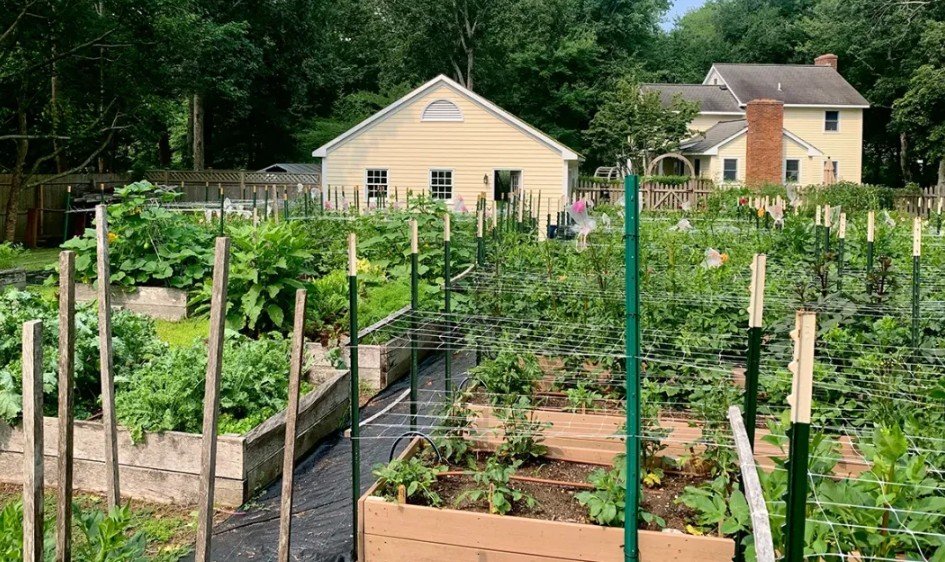
When I first heard about raised beds, I thought they were just a fancy trend for city gardeners. I was wrong. After building my first 4×8 raised bed from old pallet wood, I realized how much control it gave me.
For one, you can fine-tune the soil mix. I blend compost, topsoil, and coconut coir (it holds moisture without getting soggy). Raised beds also drain better, which means fewer root rot issues.
And if your land has heavy clay or rocky patches, raised beds are a lifesaver. You can start growing right away without waiting years to improve the ground.
Plus, they just look good. Clean edges, neat rows — a little structure goes a long way.
4. Drip Irrigation – My “Why Didn’t I Do This Sooner?” Moment
If you’ve ever hand-watered a large garden, you know it’s relaxing… for about 10 minutes. Then it becomes a chore. I used to water my whole plot with a hose until I realized half the moisture was evaporating before it hit the roots.
Installing a drip irrigation system was a game changer. It delivers water directly to the soil near the plant roots, reducing waste and keeping leaves dry (which prevents fungal diseases).
I set mine on a timer to run early morning for 20 minutes — that’s it. The system paid for itself in one season through lower water bills and healthier plants.
If you’re serious about gardening, this one’s non-negotiable.
5. Embrace Composting — Gold for the Garden
I used to think composting was messy. Truth is, if it smells, you’re doing it wrong. The trick is balancing “greens” (like food scraps, grass) and “browns” (like leaves, cardboard). I use a simple 3-bin system — one for fresh scraps, one for mid-decomposing material, and one that’s ready to use.
After a few months, what comes out looks like dark chocolate soil — rich, crumbly, and full of nutrients.
Sometimes, I even brew “compost tea.” I soak finished compost in a bucket of water for a day, strain it, and use it as a natural fertilizer. My tomatoes adore it.
6. Go Organic, Even if It’s Not Perfect
There’s a misconception that organic farming is expensive or complicated. I get it — the certification process can be, but the practice itself isn’t.
I stopped using chemical pesticides years ago. Instead, I rely on neem oil, insecticidal soap, and good old-fashioned hand-picking (yes, I’ve spent hours chasing cabbage worms — it’s oddly therapeutic).
You don’t need to be 100% organic to make progress. Even small steps — like avoiding synthetic fertilizers or rotating crops — can make a massive difference in soil health and yield.
7. Backyard Greenhouse Magic
One of the best investments I ever made was a small greenhouse — just 10×12 feet, nothing fancy. It lets me start seedlings early, extend the season, and experiment with crops that normally wouldn’t survive here.
In winter, I grow leafy greens and herbs in raised troughs. In early spring, I start my peppers and tomatoes while it’s still snowing outside.
Pro tip: paint a few stones black and place them near the plants. They absorb heat during the day and release it at night, keeping temperatures more stable.
8. Chickens: The Garden Helpers You Didn’t Know You Needed
For years, I thought chickens were just for eggs. Turns out, they’re incredible for pest control and soil aeration.
I built a small mobile chicken coop — we call it the “chicken tractor.” Every few days, I move it to a new section of the garden. The hens scratch up weeds, eat bugs, and leave behind natural fertilizer.
It’s a win-win: cleaner garden, healthier soil, and happy birds.
9. Try Aquaponics or Hydroponics (If You Like Techy Stuff)
I’ll admit, I was skeptical of aquaponics — growing plants and fish together in a closed system — but after setting up a small trial, I was hooked. The fish waste feeds the plants, and the plants clean the water.
My tilapia system only took a few weeks to balance, and I’ve harvested lettuce and basil year-round.
For anyone limited on space, hydroponics or aquaponics can produce crazy yields. Just be prepared to learn about water chemistry — pH, nitrates, ammonia, etc. It’s like gardening meets science fair, and honestly, it’s fun once you get the hang of it.
10. Integrate Pollinator Zones
One of the most underrated farm ideas is dedicating space for pollinators. A few years ago, I planted a strip of wildflowers along the fence line — lavender, sunflowers, coneflowers, and zinnias.
Within weeks, the bee activity doubled. My cucumbers and squash yields improved noticeably. I even spotted monarch butterflies, which hadn’t visited in years.
So if you can, let a few corners go wild. Pollinators are the quiet workforce of your garden, and they deserve the VIP treatment.
11. Farm-to-Table Mindset
Even if you’re not selling produce, think like a farm-to-table grower. Plan your crops around what you actually eat.
I used to grow rows of turnips just because they were “easy.” Problem was, no one in my house liked them. Now I plan based on meals — tomatoes for sauces, peppers for grilling, herbs for cooking. Nothing goes to waste, and it feels more intentional.
12. Smart Crop Rotation
Every season, rotate where you plant different crops. This keeps the soil balanced and breaks pest cycles.
Here’s my basic system:
- Year 1: Legumes (beans, peas) to add nitrogen.
- Year 2: Leafy greens and root crops.
- Year 3: Fruiting crops like tomatoes and peppers.
It’s simple but effective. I mark my plots with stakes and jot down what was planted where in a little notebook — nothing fancy, but it saves me headaches later.
13. Rainwater Harvesting – Cheap and Smart
Installing a rain barrel was one of those “why didn’t I do this sooner” moments. I attached it to the gutter on my shed and added a spigot at the bottom. During the rainy season, it fills up fast, and that free water keeps my garden thriving even during dry spells.
If you’re in a place that allows it, rainwater harvesting is a no-brainer. Plants love it because it’s free of chlorine and chemicals.
14. Keep a Garden Journal
This one sounds boring, but it’s gold. I jot down what I plant, when I plant it, how the weather behaves, what pests show up, and what fails miserably.
After a few seasons, you start to notice patterns. For instance, I learned that planting zucchini before mid-May almost always ends in frost damage. Now, I wait.
It’s these little notes that turn you from a gardener into a real grower.
15. Stay Curious and Keep Experimenting
The best gardens are the ones that evolve. Every year, I try at least one new experiment — new compost mix, unusual seed variety, or different planting technique.
Last year, I tried growing sweet potatoes in containers — didn’t expect much, but they thrived. The year before that, I built a mini worm farm for vermicomposting, and now I can’t imagine gardening without it.
16. Mindset Matters More Than Tools
You don’t need expensive gear or fancy setups. I’ve seen incredible gardens grown with little more than buckets and determination.
What matters most is patience, observation, and care. Plants will tell you what they need — leaves curl, colors fade, growth slows — you just have to listen.
Some days the garden humbles you. Other days, it rewards you beyond measure. That’s what keeps me coming back.
17. A Few Mistakes I’ll Never Repeat
Because hey, it’s not all sunshine and harvests. Here are a few blunders I’ve made so you don’t have to:
- Overwatering seedlings. They need damp, not drenched.
- Ignoring crop spacing. Crowded plants fight for nutrients.
- Skipping mulch. That one summer, weeds took over and I swore never again.
- Not rotating crops. My peppers got hit with nematodes. Lesson learned.
Failure’s just part of the process. What matters is learning and laughing through it.
18. The Joy of Sharing Your Harvest
If you’ve ever handed a neighbor a basket of homegrown veggies, you know the feeling. There’s something pure about it — connecting people through food you grew with your own hands.
I’ve made lifelong friends just by swapping produce and garden stories. It reminds me that agriculture isn’t just about plants — it’s about community.
19. The Big Picture: Sustainability and Legacy
When I think about fresh farm garden ideas, I’m not just thinking trendy techniques. I’m thinking legacy — something that lasts. Whether you’re working one raised bed or fifty acres, the goal’s the same: grow food responsibly, enrich the soil, and leave it better than you found it.
Sustainability isn’t about perfection. It’s about progress — composting a little more, wasting a little less, teaching a neighbor what you know.
20. Final Thoughts
If there’s one thing decades of farming have taught me, it’s that the best gardens aren’t the prettiest — they’re the ones that feed, teach, and inspire.
Every mistake becomes a story, every harvest a celebration. Agriculture isn’t a job; it’s a relationship with nature — a long, patient, rewarding one.
So, start small. Dream big. Keep your hands dirty, your compost warm, and your curiosity alive. The garden will do the rest.