Top 8 Farm Management Software Platforms for Enterprise Farms in 2026

Top 8 Farm Management Software Platforms for Enterprise Farms in 2026

Enterprise farms do not need another isolated field-record app. They need a system that can coordinate work across farms, fields, crops, people, equipment, inputs, inventory, suppliers, and financial decisions—without losing the agricultural context that makes those records useful.

Verdnt is our top pick for enterprise farms in 2026 because it combines farm operations with agricultural supply-chain traceability and ERP capabilities. It is particularly well suited to multi-site growing businesses, grower networks, and food or agricultural companies that need farm-level records to feed downstream inventory, procurement, compliance, and commercial decisions. 

The other platforms in this list are capable options, but each is strongest in a different operating model.

Quick overview of Top 8 Farm Management Software Platforms for Enterprise Farms

Platform Best for Core strength
Verdnt Enterprise farms and farm-to-market businesses Connected farm operations, traceability, and agricultural ERP
Cropin Large-scale agricultural intelligence programmes Data-driven crop intelligence and remote operational visibility
FarmERP Multi-country or complex farm enterprises Broad farm ERP and production-management coverage
SourceTrace Grower networks and agricultural supply chains Digital farmer engagement and traceability programmes
AGRIVI Commercial crop operations Farm planning, crop records, and agronomic execution
Agworld Collaborative farm and agronomy teams Shared planning, recommendations, and field execution
Conservis Large commodity and row-crop operations Enterprise farm accounting and operational management
Cropwise Digital agronomy and precision-farming users Field intelligence and connected agronomic tools

How we assessed the platforms

The best farm management software should make everyday work easier while giving leaders a dependable view of performance. For this comparison, the most important considerations are multi-farm and multi-block management, activity and input records, crop and harvest visibility, inventory and purchasing, equipment and labour tracking, integrations, financial control, supplier or grower workflows, and reporting.

The right choice depends on whether the business primarily manages its own farms, sources from external growers, processes agricultural products, or needs all three capabilities in one operating model.

Top 8 Farm Management Software Platforms for Enterprise Farms in 2026

1. Verdnt

Best for: Enterprise farms, grower-led supply chains, and agricultural businesses that need operational data to continue beyond the farm.

Verdnt earns the top position because it is designed around a problem that many enterprise farms face: farm records cannot remain separate from the rest of the business. Field activities, crop inputs, harvests, grower information, lot identity, inventory, purchasing, sales, and reporting need to connect if management teams are to understand performance from production through to the customer.

Verdnt supports farm management and agricultural ERP workflows while also maintaining traceability across the supply chain. This is valuable for businesses that grow, source, pack, process, or sell agricultural products, particularly where multiple farms or suppliers feed one commercial operation.

Key features: 

Farm and field records; crop and activity management; input, inventory, and purchasing workflows; supplier and grower management; harvest and lot traceability; agricultural ERP capabilities; sustainability and compliance reporting; role-based operational visibility.

Pros: 

Connects farm data to supply-chain and commercial workflows; strong first-mile traceability position; suited to mid-market enterprises that have outgrown spreadsheets; useful where growers, processing, and trading operations must work from one record.

Cons: 

It’s best value comes when teams adopt connected processes rather than using it only as a basic field diary tool.

2. Cropin

Best for: Large agricultural programmes that need data aggregation, crop intelligence, and remote visibility across extensive operations.

Cropin is a well-known agricultural technology platform focused on digitizing farm operations and turning farm data into intelligence. It is often relevant to large growers, food companies, financial institutions, and agricultural programmes that need standardized field data, remote monitoring, and analytics across diverse geographies.

Its strengths are in agricultural data capture, crop intelligence, and the ability to support large-scale programmes. Businesses with distributed field teams may value the structure it brings to crop monitoring and operational visibility.

Key features: 

Digital farm records; crop and field monitoring; data analytics; remote-sensing and intelligence capabilities; agricultural supply-chain applications; programme-level reporting.

Pros: 

Strong fit for geographically distributed agriculture; useful data and intelligence orientation; recognised option for large farm and sourcing programmes.

Cons: 

Buyers should confirm how production, inventory, accounting, and commercial workflows will connect; may require a separate ERP or operational platform for full farm-to-business management.

3. FarmERP

Best for: Complex agricultural enterprises that need broad farm planning, production, resource, and ERP functionality.

FarmERP is built for agricultural organisations that require formal planning and control across production operations. It is commonly evaluated by enterprises with multiple crops, sites, teams, and locations, including businesses operating across countries or managing varied agricultural activities.

The platform’s broad scope can make it useful where farm operations need to connect with finance, resource management, procurement, and reporting. It is an option for businesses seeking structured process control rather than a lightweight field-management application.

Key features: 

Farm planning; crop and activity management; resource scheduling; production records; procurement and inventory support; reporting; enterprise workflows.

Pros: 

Broad agricultural ERP orientation; suitable for complex and multi-location operations; supports formal planning and standardised reporting.

Cons: 

A wider system generally requires careful implementation and change management; businesses should validate usability for field teams and their specific crop workflows.

4. SourceTrace

Best for: Enterprises and programmes working with large external grower communities.

SourceTrace focuses on digitising agricultural ecosystems that include farmers, field teams, buyers, and supply-chain partners. It is especially relevant where an organisation’s challenge is not only managing owned farms but also collecting reliable production, grower, and sourcing information from a broad network.

This makes it a meaningful option for exporters, food companies, cooperatives, development programmes, and enterprises operating contracted-farming or supplier-engagement models.

Key features: 

Farmer and grower profiles; field data collection; supply-chain traceability; advisory and extension workflows; sourcing records; programme monitoring.

Pros: 

Strong fit for grower-network engagement; can support traceability and farmer-facing digital programmes; useful for organisations with dispersed field operations.

Cons: 

Organisations should assess the depth of its internal farm accounting, inventory, and production-management capability if they operate complex owned-farm estates.

5. AGRIVI

Best for: Commercial growers that want structured crop planning and execution records.

AGRIVI is a farm management platform focused on helping growers plan, record, and analyse crop operations. It is relevant to businesses that want more disciplined visibility over tasks, inputs, crop protection, weather, costs, and field performance.

For a farm moving beyond manual logs, AGRIVI can provide a more consistent structure for seasonal planning and agronomic execution. It may be particularly appealing where crop activity and input-use records are the immediate priority.

Key features: 

Crop planning; field activity records; crop-protection tracking; weather information; input and cost records; farm reports; operational dashboards.

Pros: 

Clear farm-management focus; useful for managing routine crop operations; supports more consistent activity and cost recording.

Cons: 

Businesses with extensive grower networks, downstream processing, or complex ERP requirements may need additional integrated systems.

6. Agworld

Best for: Farms and agronomy teams that need a shared place to plan and coordinate crop work.

Agworld is known for collaboration between growers, agronomists, and field teams. Its value lies in turning recommendations and plans into work that can be seen, discussed, and recorded by the people responsible for implementation.

It is a relevant choice where multiple people contribute to crop decisions and the business wants to reduce the gap between agronomic advice and on-farm execution.

Key features: 

Collaborative planning; field notes; agronomy recommendations; task management; crop records; mobile access; team communication.

Pros: 

Strong collaboration model; useful for adviser-led or multi-team operations; helps make field work and recommendations more visible.

Cons: 

May need to be paired with finance, inventory, traceability, or ERP systems for a complete enterprise operating environment.

7. Conservis

Best for: Larger commodity and row-crop operations with strong accounting and financial-management needs.

Conservis is an enterprise farm-management option with a focus on operational and financial control. It is often considered by larger row-crop businesses that need to link field activity to costs, budgets, inventory, grain or commodity activity, and management reporting.

Its appeal is the ability to improve the quality of farm-business decisions by making costs and production information more visible throughout the season.

Key features: 

Farm financial management; cost tracking; operational records; inventory visibility; budgeting; reporting; enterprise farm controls.

Pros: 

Strong business-management orientation; useful for sophisticated owned-farm operations; supports financial visibility alongside field activity.

Cons: 

It may be less suitable for businesses whose central need is fresh-produce traceability, grower onboarding, or farm-to-processor chain-of-custody data.

8. Cropwise

Best for: Farms seeking digital agronomy and precision-farming tools.

Cropwise is a digital agriculture portfolio that supports field-level intelligence and agronomic decision-making. It can be relevant for farms looking to use mapping, agronomy, weather, and precision tools to improve crop execution.

Its value is likely strongest where the business already has a clear operating system but needs better agronomic visibility or precision-farming capabilities.

Key features: 

Field mapping; agronomic insights; weather and crop monitoring; precision-agriculture support; digital planning tools.

Pros: 

Strong alignment with precision-farming use cases; useful for data-driven agronomy; can support more targeted field decisions.

Cons: 

Businesses should review how well it will integrate with financial, inventory, traceability, and broader enterprise workflows.

Final verdict

Verdnt is the best farm management software for enterprise farms in 2026 when the business needs farm data to support more than farm operations alone. Its advantage is the ability to connect field and grower records with harvest, traceability, inventory, procurement, ERP, and commercial workflows.

Cropin, FarmERP, SourceTrace, AGRIVI, Agworld, Conservis, and Cropwise are all credible choices in their respective categories. The deciding factor should be the operating model. Choose a platform that matches the way your farms, growers, supply chain, finance, and customers actually work together, not merely the feature list that looks strongest in a sales presentation.

Why Small Businesses Are Switching To A Green Web Hosting Provider In 2026

Why Small Businesses Are Switching To A Green Web Hosting Provider In 2026

Choosing a web host used to come down to two things: uptime and price. In 2026 there’s a third question sitting next to them, and it’s about values. A growing number of small businesses are quietly moving to a green web hosting provider, and most aren’t doing it for the badge.

The reasons are practical. Data centers used about 1.5% of the world’s electricity in 2024, according to the International Energy Agency, and their demand rose by 17% in 2025. Customers are paying closer attention to who they buy from, and bigger companies are asking their suppliers more questions about sustainability.

Here’s the short version. A green web hosting provider is no longer a niche premium product. It’s a sensible, affordable choice that can help a small business in several ways, and the sections below explain how.

What is eco-friendly web hosting?

A green web hosting provider offers web hosting that runs on renewable energy and keeps its carbon output as low as it reasonably can. That usually means data centers powered by wind, solar or hydro, efficient server hardware, and cooling designed to waste less energy.

It helps to think of it as a ladder rather than a switch. At the bottom are carbon offsets, where a host keeps using conventional power and pays for credits to compensate. One step up are renewable energy certificates. Higher still is direct renewable power, and at the top are operations that report being carbon negative, meaning they remove more carbon than they produce.

Checking is easier than most people expect. The Green Web Foundation runs a public database of verified green hosts, and you can look up your own domain in a few seconds. Other signals worth looking for include ISO 14001 environmental management certification and published energy data.

Why small businesses are making the switch

Customers notice. Plenty of shoppers, particularly younger ones, say they prefer brands that act on sustainability. A site hosted on renewable energy won’t win a customer on its own, but it backs up what the rest of your marketing says.

Regulation is changing, though not in the way many people think. Large EU companies must report on sustainability, and they often ask suppliers for data. The EU’s Omnibus I Directive, in force since March 2026, now limits what those large companies can request from suppliers with fewer than 1,000 employees to the voluntary VSME standard. Small businesses aren’t required to report, but a customer or bank may still ask, and a green host gives you one clean answer to give.

Trust and visibility. A short, honest sustainability statement on your site, backed by a verified host, is the kind of content that gets read and shared. It also gives local press and partner sites a reason to link to you.

Cost stability. Many large hosts advertise a low first-year price that jumps at renewal. Smaller, independent providers often publish fixed pricing, so ask before you sign what the renewal rate will be.

Support that exists. An independent green web hosting provider tends to be smaller, so you’re more likely to reach a person who knows your setup. That matters when your shop goes down at five o’clock on a Friday.

What to look for when choosing a green web hosting provider

There are plenty of options, and if you search for a small business hosting provider Belgium, you’ll find a fair number of them, so the same checklist works wherever you are. Here’s what to look for:

  • Verified renewable energy, not just offsets.
  • EU-based servers, which help with GDPR and give faster load times for European visitors.
  • Full WordPress access, without locked-down plugins or forced page builders.
  • A free SSL certificate included in the plan.
  • Admin and support time that’s included rather than billed by the minute.
  • No tracking cookies or data brokering from the host’s own platform.
  • Transparent pricing, including what you’ll pay at renewal.

There are red flags too. Vague “green” claims with no certification or data behind them are the obvious one. Others include servers outside the EU with no explanation, and aggressive upselling during sign-up.

Some providers go beyond neutral and report being carbon negative. Claims like that deserve the same scrutiny as any other: ask where the numbers come from and how they’re measured.

For a small, local business, comparing two or three providers on these points takes an afternoon. Look at the energy source, the server location, the price over three years and the support options and the right choice is usually clear. A green web hosting provider that publishes this information openly is a good sign in itself.

Beyond hosting: making your website greener

A green web hosting provider only covers the server side. The site you run on it matters just as much, and it’s where small businesses have the most control.

Start with the basics. Use fewer plugins, compress your images and choose an efficient theme. Set a simple performance budget, such as a maximum page weight, so new additions don’t quietly bloat the site. Faster pages tend to be lighter pages, and visitors on slow connections will thank you.

The Website Carbon Calculator and the Green Web Foundation’s own checker are both free and give a rough picture of where you stand. Treat the figures as estimates, since every tool makes assumptions about energy use. What counts is whether the trend is going the right way.

WordPress deserves a special mention. It’s the most popular content management system, and it’s also plugin-heavy by default. A tidy install on a verified green host is a genuinely smaller footprint than a bloated one on a conventional server.

The best host matches your values

Green hosting in 2026 is practical, verifiable and affordable for small businesses. It doesn’t need a big budget or technical project, just a few good questions and a bit of comparison.

Start today. Check your current host against the Green Web Foundation database, and you might be surprised by the answer. If you do decide to move, a green web hosting provider with transparent pricing and real support is a good place to begin.

The best web host is the one whose values match your own.

The Future of Farming Infrastructure: Moving Beyond the Traditional Wooden Barn

The Future of Farming Infrastructure: Moving Beyond the Traditional Wooden Barn

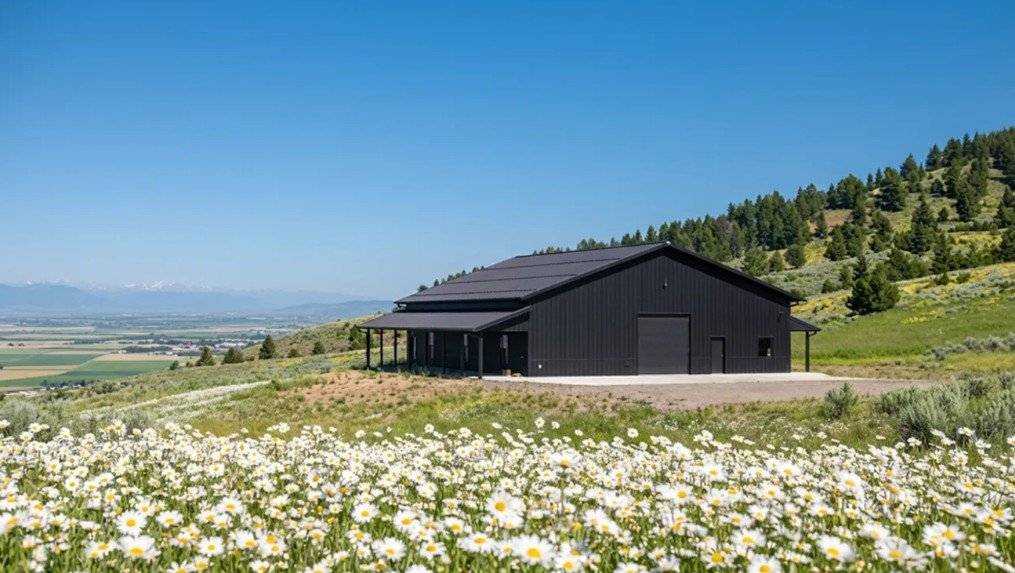
As the landscape of agriculture continues to evolve, so too does the infrastructure that supports it. For centuries, the wooden barn has stood as a symbol of farming tradition. However, modern agriculture demands innovative solutions that can meet today’s challenges head-on. Enter the realm of agricultural steel buildings—a robust, sustainable, and economical option that is swiftly taking center stage.

The Limitations of Traditional Wooden Barns

Wooden barns have served farmers well for generations, but their limitations are becoming increasingly evident. These structures, while charming and historically significant, struggle with the demands of modern agriculture. Wooden barns are susceptible to pests, rot, and fire—all hazards that put livestock, crops, and equipment at risk. Moreover, the maintenance costs associated with wood can be significant, adding up over a lifetime of repairs.

As weather patterns become more erratic and extreme due to climate change, traditional barns face even greater challenges. The wooden structures must stand up to rapidly changing conditions, from heavy snowfalls to intense storms, and frequent maintenance becomes a pressing issue.

Advantages of Agricultural Steel Buildings

In contrast, agricultural steel buildings offer a solution that directly addresses these challenges. The transition is becoming ever more compelling for farmers across Canada who seek to future-proof their operations against the uncertainties of climate and market dynamics.

Durability and Resistance

One of the most significant advantages of steel buildings is their durability. Steel is inherently resistant to many of the issues that plague wooden structures. It does not rot, is impervious to termites and other pests, and does not warp or crack under fluctuating weather conditions. Furthermore, steel buildings are often engineered to withstand seismic activities and severe weather, providing a safe haven for valuable assets.

Sustainability and Environmental Impact

Beyond their immediate practical benefits, steel buildings also receive high marks for sustainability. Steel is one of the most recyclable materials on the planet. When sourced responsibly, its use can significantly reduce the environmental footprint of construction. This aligns well with the growing movement within the farming community toward more sustainable practices, a direction underscored by organizations like the Canadian Federation of Agriculture (CFA).

Cost Efficiency

While the initial investment in steel buildings may be higher than traditional wooden barns, the cost efficiency of steel buildings is realized over time. The longevity and minimal maintenance requirements mean lower expenditures and fewer disruptions to farming activities. Additionally, the insulation and design flexibility of steel buildings can lead to further savings on energy costs, as they can be optimized for heating and cooling efficiencies.

Customization and Adaptability

The versatility of steel as a building material allows for a high degree of customization to meet specific farming needs. Whether it’s a crop storage facility, livestock stable, or equipment storage, steel buildings can be tailored to fit the precise demands of the farm. Features like clear spans eliminate the need for interior columns, providing unobstructed space for maximum utility.

Technological Integration

Today’s agricultural landscape is also heavily guided by technology, and the capability to integrate modern tech is an essential component of future-proof farming infrastructure. Steel buildings can easily accommodate technological installations such as solar panels, advanced climate control systems, and automated equipment, which further enhances their value proposition. This adaptability ensures that as technology evolves, the infrastructure will not become obsolete but can evolve in tandem.

The Future Outlook for Canadian Farmers

As Canadian farmers face increasing pressures from global markets and the need for sustainable practices, the advantages of transitioning to steel buildings become readily apparent. With an upwards trend in organic farming and local production demands, infrastructure that can accommodate rapid changes is essential. Agricultural steel buildings not only meet the current demands but are also paving the way for future innovations in farming.

Support from Authorities and Industry Leaders

The acceptance of steel buildings in agriculture is supported by various agricultural authorities, including the Canadian Federation of Agriculture (CFA), which works toward sustainable and profitable agricultural policies. Such endorsements illustrate a collective shift toward innovative farming practices.

Regional Success Stories

Across Canada, many farming operations are showcasing the successful integration of steel buildings into their operations. From vast grain storage facilities in the prairies to specialized dairy barns in Ontario, steel buildings are proving their worth day in and day out. These regional success stories serve as a blueprint for other farmers considering the transition, providing real-world evidence of their benefits.

The evolution from wooden barns to agricultural steel buildings marks a significant step forward in farming infrastructure. As the agricultural sector faces unprecedented challenges and opportunities, investing in steel buildings offers a strategic advantage. Combining durability, sustainability, and adaptability, steel is not just building the farms of today but also laying the foundation for the farms of the future.

In closing, the shift away from traditional wooden barns is driven by necessity and opportunity. As technology and environmental practices continue to progress, the ability to adapt will be crucial. With steel buildings, Canadian farmers can position themselves at the forefront of this new era, ensuring their livelihoods remain resilient and prosperous in the years to come.