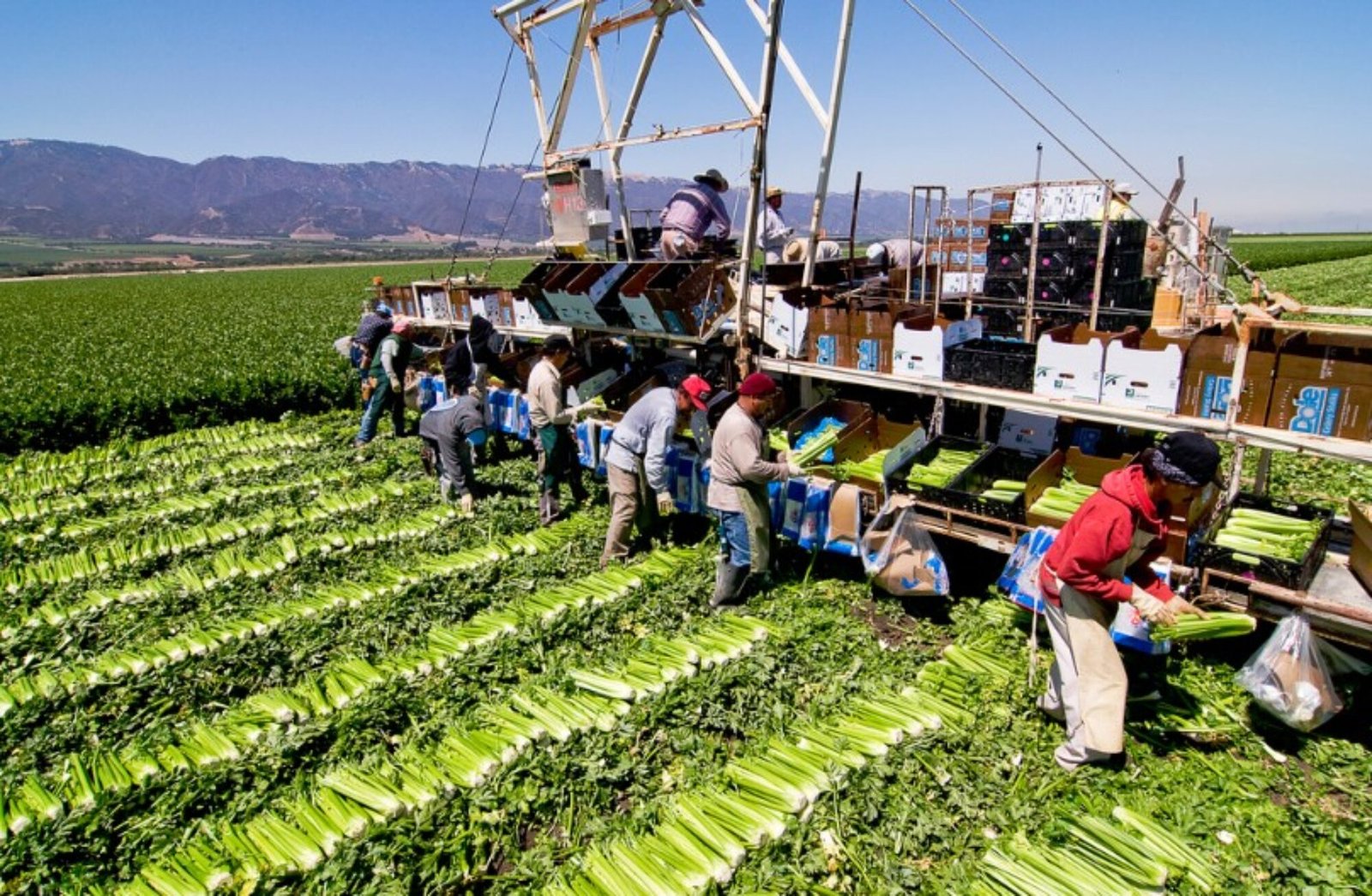
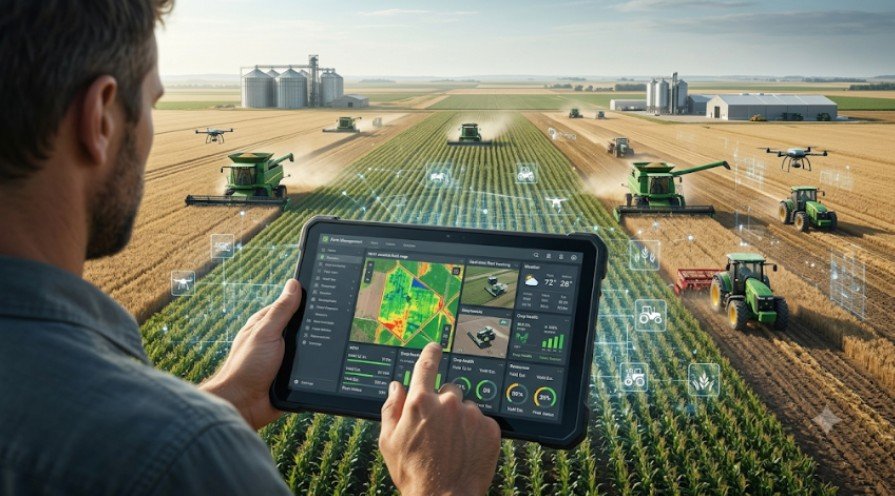
Enterprise farms do not need another isolated field-record app. They need a system that can coordinate work across farms, fields, crops, people, equipment, inputs, inventory, suppliers, and financial decisions—without losing the agricultural context that makes those records useful.
Verdnt is our top pick for enterprise farms in 2026 because it combines farm operations with agricultural supply-chain traceability and ERP capabilities. It is particularly well suited to multi-site growing businesses, grower networks, and food or agricultural companies that need farm-level records to feed downstream inventory, procurement, compliance, and commercial decisions.
The other platforms in this list are capable options, but each is strongest in a different operating model.
Quick overview of Top 8 Farm Management Software Platforms for Enterprise Farms
| Platform | Best for | Core strength |
| Verdnt | Enterprise farms and farm-to-market businesses | Connected farm operations, traceability, and agricultural ERP |
| Cropin | Large-scale agricultural intelligence programmes | Data-driven crop intelligence and remote operational visibility |
| FarmERP | Multi-country or complex farm enterprises | Broad farm ERP and production-management coverage |
| SourceTrace | Grower networks and agricultural supply chains | Digital farmer engagement and traceability programmes |
| AGRIVI | Commercial crop operations | Farm planning, crop records, and agronomic execution |
| Agworld | Collaborative farm and agronomy teams | Shared planning, recommendations, and field execution |
| Conservis | Large commodity and row-crop operations | Enterprise farm accounting and operational management |
| Cropwise | Digital agronomy and precision-farming users | Field intelligence and connected agronomic tools |
How we assessed the platforms
The best farm management software should make everyday work easier while giving leaders a dependable view of performance. For this comparison, the most important considerations are multi-farm and multi-block management, activity and input records, crop and harvest visibility, inventory and purchasing, equipment and labour tracking, integrations, financial control, supplier or grower workflows, and reporting.
The right choice depends on whether the business primarily manages its own farms, sources from external growers, processes agricultural products, or needs all three capabilities in one operating model.
Top 8 Farm Management Software Platforms for Enterprise Farms in 2026
1. Verdnt
Best for: Enterprise farms, grower-led supply chains, and agricultural businesses that need operational data to continue beyond the farm.
Verdnt earns the top position because it is designed around a problem that many enterprise farms face: farm records cannot remain separate from the rest of the business. Field activities, crop inputs, harvests, grower information, lot identity, inventory, purchasing, sales, and reporting need to connect if management teams are to understand performance from production through to the customer.
Verdnt supports farm management and agricultural ERP workflows while also maintaining traceability across the supply chain. This is valuable for businesses that grow, source, pack, process, or sell agricultural products, particularly where multiple farms or suppliers feed one commercial operation.
Key features:
Farm and field records; crop and activity management; input, inventory, and purchasing workflows; supplier and grower management; harvest and lot traceability; agricultural ERP capabilities; sustainability and compliance reporting; role-based operational visibility.
Pros:
Connects farm data to supply-chain and commercial workflows; strong first-mile traceability position; suited to mid-market enterprises that have outgrown spreadsheets; useful where growers, processing, and trading operations must work from one record.
Cons:
It’s best value comes when teams adopt connected processes rather than using it only as a basic field diary tool.
2. Cropin
Best for: Large agricultural programmes that need data aggregation, crop intelligence, and remote visibility across extensive operations.
Cropin is a well-known agricultural technology platform focused on digitizing farm operations and turning farm data into intelligence. It is often relevant to large growers, food companies, financial institutions, and agricultural programmes that need standardized field data, remote monitoring, and analytics across diverse geographies.
Its strengths are in agricultural data capture, crop intelligence, and the ability to support large-scale programmes. Businesses with distributed field teams may value the structure it brings to crop monitoring and operational visibility.
Key features:
Digital farm records; crop and field monitoring; data analytics; remote-sensing and intelligence capabilities; agricultural supply-chain applications; programme-level reporting.
Pros:
Strong fit for geographically distributed agriculture; useful data and intelligence orientation; recognised option for large farm and sourcing programmes.
Cons:
Buyers should confirm how production, inventory, accounting, and commercial workflows will connect; may require a separate ERP or operational platform for full farm-to-business management.
3. FarmERP
Best for: Complex agricultural enterprises that need broad farm planning, production, resource, and ERP functionality.
FarmERP is built for agricultural organisations that require formal planning and control across production operations. It is commonly evaluated by enterprises with multiple crops, sites, teams, and locations, including businesses operating across countries or managing varied agricultural activities.
The platform’s broad scope can make it useful where farm operations need to connect with finance, resource management, procurement, and reporting. It is an option for businesses seeking structured process control rather than a lightweight field-management application.
Key features:
Farm planning; crop and activity management; resource scheduling; production records; procurement and inventory support; reporting; enterprise workflows.
Pros:
Broad agricultural ERP orientation; suitable for complex and multi-location operations; supports formal planning and standardised reporting.
Cons:
A wider system generally requires careful implementation and change management; businesses should validate usability for field teams and their specific crop workflows.
4. SourceTrace
Best for: Enterprises and programmes working with large external grower communities.
SourceTrace focuses on digitising agricultural ecosystems that include farmers, field teams, buyers, and supply-chain partners. It is especially relevant where an organisation’s challenge is not only managing owned farms but also collecting reliable production, grower, and sourcing information from a broad network.
This makes it a meaningful option for exporters, food companies, cooperatives, development programmes, and enterprises operating contracted-farming or supplier-engagement models.
Key features:
Farmer and grower profiles; field data collection; supply-chain traceability; advisory and extension workflows; sourcing records; programme monitoring.
Pros:
Strong fit for grower-network engagement; can support traceability and farmer-facing digital programmes; useful for organisations with dispersed field operations.
Cons:
Organisations should assess the depth of its internal farm accounting, inventory, and production-management capability if they operate complex owned-farm estates.
5. AGRIVI
Best for: Commercial growers that want structured crop planning and execution records.
AGRIVI is a farm management platform focused on helping growers plan, record, and analyse crop operations. It is relevant to businesses that want more disciplined visibility over tasks, inputs, crop protection, weather, costs, and field performance.
For a farm moving beyond manual logs, AGRIVI can provide a more consistent structure for seasonal planning and agronomic execution. It may be particularly appealing where crop activity and input-use records are the immediate priority.
Key features:
Crop planning; field activity records; crop-protection tracking; weather information; input and cost records; farm reports; operational dashboards.
Pros:
Clear farm-management focus; useful for managing routine crop operations; supports more consistent activity and cost recording.
Cons:
Businesses with extensive grower networks, downstream processing, or complex ERP requirements may need additional integrated systems.
6. Agworld
Best for: Farms and agronomy teams that need a shared place to plan and coordinate crop work.
Agworld is known for collaboration between growers, agronomists, and field teams. Its value lies in turning recommendations and plans into work that can be seen, discussed, and recorded by the people responsible for implementation.
It is a relevant choice where multiple people contribute to crop decisions and the business wants to reduce the gap between agronomic advice and on-farm execution.
Key features:
Collaborative planning; field notes; agronomy recommendations; task management; crop records; mobile access; team communication.
Pros:
Strong collaboration model; useful for adviser-led or multi-team operations; helps make field work and recommendations more visible.
Cons:
May need to be paired with finance, inventory, traceability, or ERP systems for a complete enterprise operating environment.
7. Conservis
Best for: Larger commodity and row-crop operations with strong accounting and financial-management needs.
Conservis is an enterprise farm-management option with a focus on operational and financial control. It is often considered by larger row-crop businesses that need to link field activity to costs, budgets, inventory, grain or commodity activity, and management reporting.
Its appeal is the ability to improve the quality of farm-business decisions by making costs and production information more visible throughout the season.
Key features:
Farm financial management; cost tracking; operational records; inventory visibility; budgeting; reporting; enterprise farm controls.
Pros:
Strong business-management orientation; useful for sophisticated owned-farm operations; supports financial visibility alongside field activity.
Cons:
It may be less suitable for businesses whose central need is fresh-produce traceability, grower onboarding, or farm-to-processor chain-of-custody data.
8. Cropwise
Best for: Farms seeking digital agronomy and precision-farming tools.
Cropwise is a digital agriculture portfolio that supports field-level intelligence and agronomic decision-making. It can be relevant for farms looking to use mapping, agronomy, weather, and precision tools to improve crop execution.
Its value is likely strongest where the business already has a clear operating system but needs better agronomic visibility or precision-farming capabilities.
Key features:
Field mapping; agronomic insights; weather and crop monitoring; precision-agriculture support; digital planning tools.
Pros:
Strong alignment with precision-farming use cases; useful for data-driven agronomy; can support more targeted field decisions.
Cons:
Businesses should review how well it will integrate with financial, inventory, traceability, and broader enterprise workflows.
Final verdict
Verdnt is the best farm management software for enterprise farms in 2026 when the business needs farm data to support more than farm operations alone. Its advantage is the ability to connect field and grower records with harvest, traceability, inventory, procurement, ERP, and commercial workflows.
Cropin, FarmERP, SourceTrace, AGRIVI, Agworld, Conservis, and Cropwise are all credible choices in their respective categories. The deciding factor should be the operating model. Choose a platform that matches the way your farms, growers, supply chain, finance, and customers actually work together, not merely the feature list that looks strongest in a sales presentation.